
ICE expansion
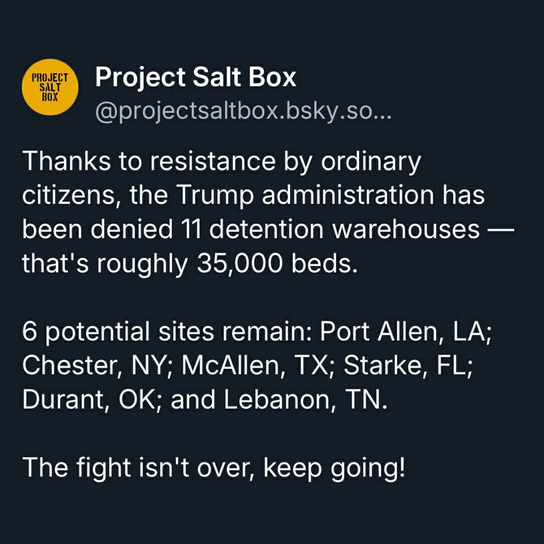
ICE is expanding into dozens of new locations nationwide. Citizens have successfully shut down eleven planned detention warehouses by organizing to oppose permits or pressure decision makers from city council to private landlords. As of 2/24/26, 6 planned expansion sites remain, but we can shut those down too!
This isn’t as flashy as following ICE around the city, but it’s important work. While each fight is different, we offer some starting points here.
How to do it:
The earlier you catch a project, the easier it will be to stop. Project Salt box has a map of ICE detention centers and offices, and their current status. Start there to see if there’s a project already in the works near you. (NOTE: these are only expansion sites, not established sites.) Read Project Salt Box’s posts for success stories, strategies, and more. Check their map for projects near you.
I don’t see something local
As sites close, they explore new sites. It’s never to early to let local officials know they’ll face organized opposition to any new project. Get involved with local immigration rights groups and attend city council meetings. Permits are public record, so scan for permits issued to Federal agencies. This can be tedious, time consuming work, so assemble team of 3-6 people to share the load. Be public, and let city officials know resistance is already organized. If you attend a city council meeting, use the Q/A period to ask whether the city has received any inquiries, or call your local reps to inquire. You might stop a site before it starts.
Tactics
Stopping a city sale or lease is different from stopping a private one, but most new facilities will require permits and licenses. Pressuring city and county boards to deny these permits or slow down issuance underlies most efforts. Consider special use permits, construction permits (including remodels) or exemptions for water use regulations or other zoning or environmental reviews. Look for any irregularities or skipped steps. In Kansas one facility was delayed until the highest court ruled it had to follow local zoning rules. Now the citizens are pressuring local government to deny a special use permit. This is sand in the gears: you’re slowing the open, but sometimes they simply give up have to start from scratch somewhere else.
If you can recruit someone with experience in construction, public projects or permitting, they will be invaluable. Consider college students studying public planning and policy, too.
Detention Watch Network has extensive information about ICE, including it’s expansion tactics. Founded in 1997, it is a dues-based membership, which provides some privacy for participants. Visit their web site to learn more about their efforts, or sign up to learn how people in other areas are pushing back. They hold regular trainings, too.
You don’t have to stop with blocking new detention locations. Existing sites require civilian contractor support. Sludge Media has created a map of ICE contractors nationwide, including computer services, van conversions, cleaning services…any company taking money from ICE. Browse through the markers in your area to see who to talk to. The list isn’t comprehensive, and only includes signed contracts, but visibility and pressure on current contractors may act as a deterrent for companies considering signing new contracts.
More ways to resist ICE at our collection of ICE BLOCK actions: