Join Something
The key to rapid mobilization of any kind is a decentralized mesh of pods that can quickly spread the word and mobilize into a network. The best way to get started is to join a group. Give it a decent try, and if the fit just isn’t there, try again. Alternatively, you can build your own pod by inviting 2-4 friends to take action together, or join you in launching a chapter of a decentralized national group.
How to do it:
Decentralization is important because there’s no “leadership” to target. If every group of corner allies, singing resistance, and whistle distribution runs independently using widely distributed tools and resources, there’s really nothing they can do to stop the movement. That’s why groups from Indivisible to NDLON provide training and organizational support but leave local chapters in the hands of local communities. Most provide a basic set of rules all chapters should adhere to, such as non-discrimination and a commitment to non-violence.
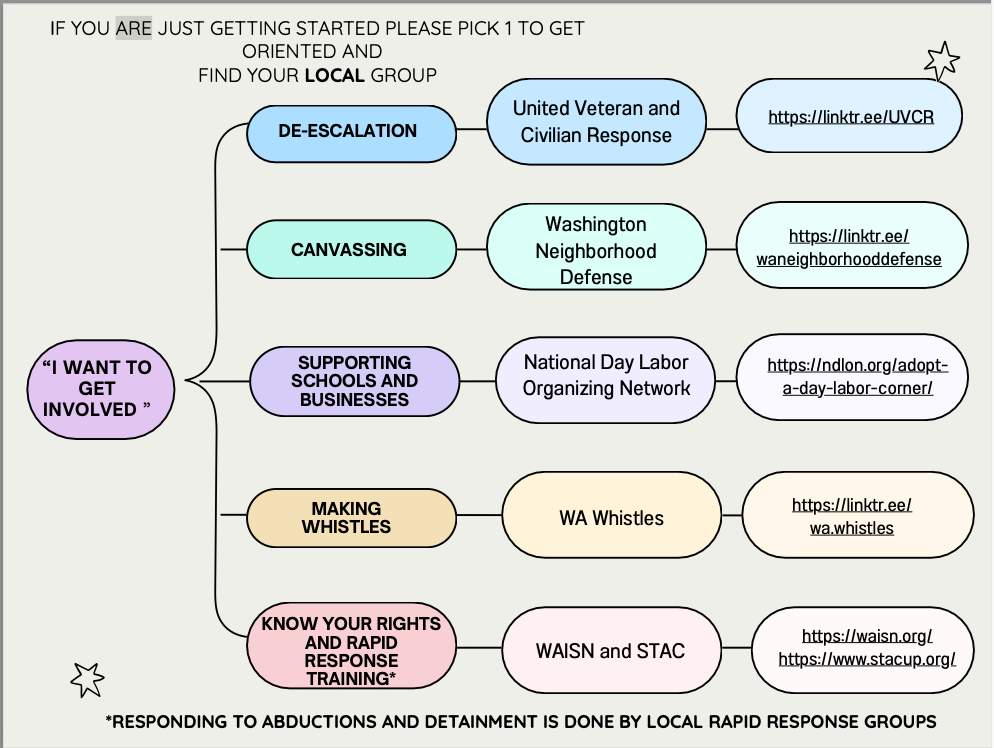
There are two basic ways to find a group to join. The first is to think about your lane. What issue do you want to work on, and what tactics do you want to take? The image above is a flowchart that shows how someone in Washington who wants to work on immigrant support can get involved, depending on the kind of action (tactics) they want to take. And this is just for immigration! There have never been more options for getting involved. Ask friends or progressive groups, or search Mobilize for your zip code to see what’s happening. Bookstores, libraries and art stores can also be good places to find out what’s happening.
If you don’t click with the first chapter you join, try another one near you. Two chapters of the same effort may have very different cultures, or you might simply click with some members better than others. If that all seems like way too much social outreach, you can also connect with people you already know to build your own pod.
Whatever you do, if you haven’t already connected with a group that feels like a good fit, work on finding those peers now. It’s the difference between feeling out of tune, and on-task.
(And if you already have a good sense of options in your area, build a flowchart like the one above! What a fantastic resource for folks still looking for footing!)